CONTACT US
Enter your Name, Email Address and a short message. We'll respond to you as soon as possible.
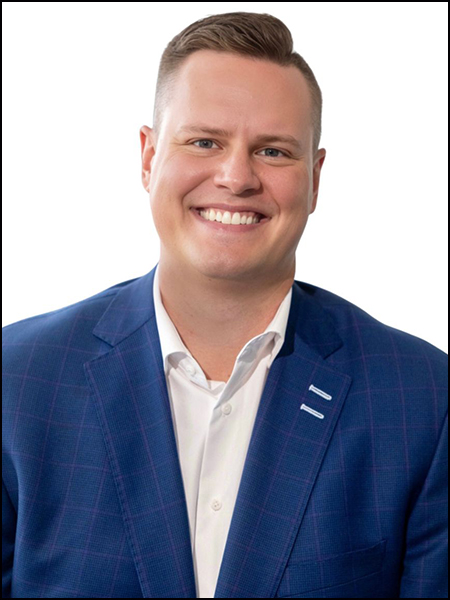

Doug Oosterhart, CFP®
Owner/Financial Advisor
LifePoint Planning, PLLC
1821 Walden Office Square, Suite 400
Schaumburg, IL 60173
Phone: 844-505-3618
Email: doug@lifepointplanning.com
Website: www.lifepointplanning.com

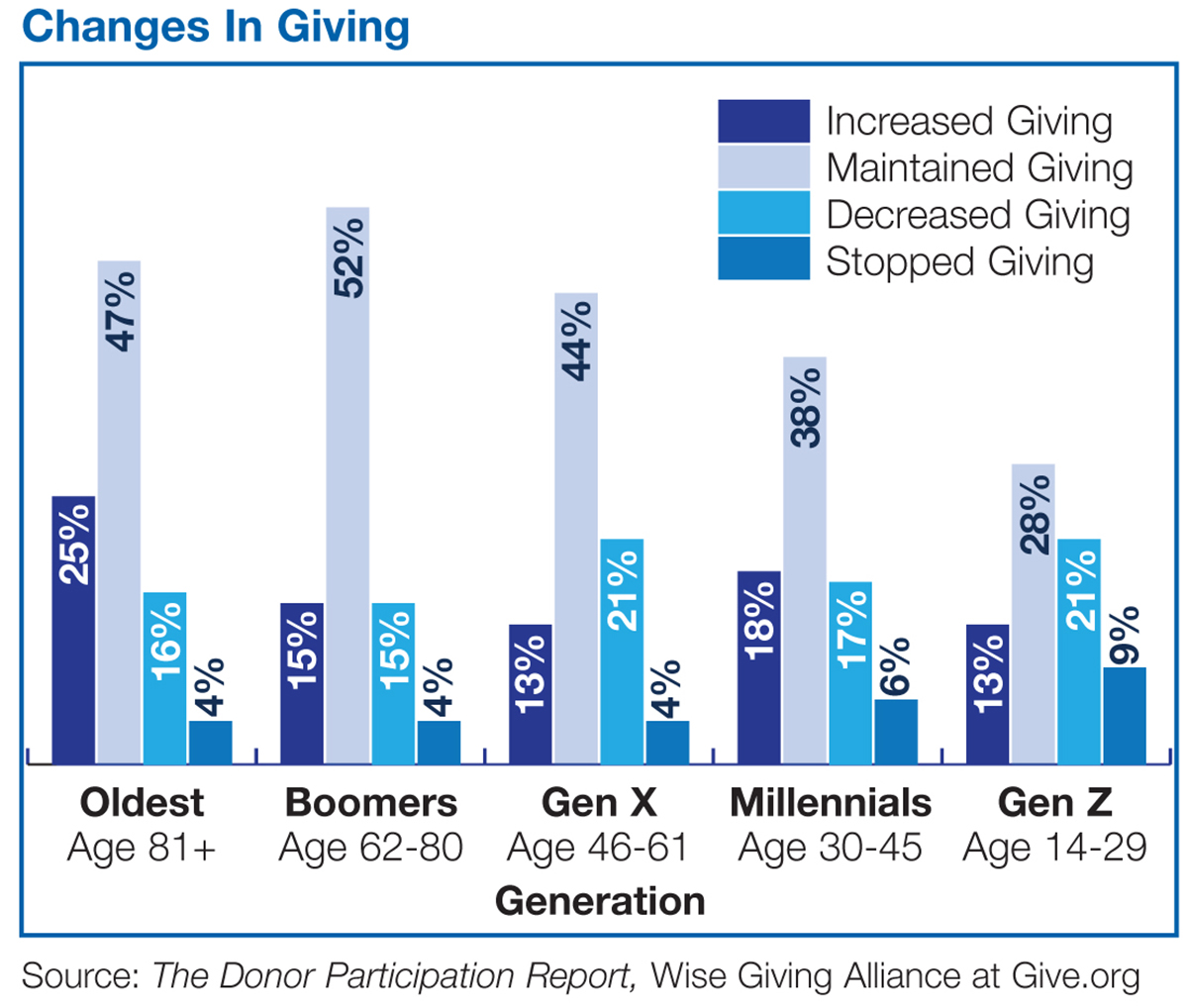
Charitable giving helps finance causes and needs you believe in, provides personal satisfaction, and offers potential tax advantages. So why has giving among younger individuals stagnated or declined over the past five years?
Lack of communication may cause some younger donors to decrease or halt contributions. While all donors appreciate regular contact from organizations they support, younger donors have a greater desire for frequent email and text communication. Surprisingly, nearly three-quarters of Gen Z donors would welcome physical mailings from the organizations they support.
Source: The Donor Participation Report, Wise Giving Alliance at Give.org
Enter your Name, Email Address and a short message. We'll respond to you as soon as possible.
LifePoint Planning, PLLC and LTM Marketing Solutions, LLC are unrelated companies. This publication was prepared for the publication’s provider by LTM Marketing Solutions, LLC, an unrelated third party. Articles are not written or produced by the named representative.
The information and opinions contained in this web site are obtained from sources believed to be reliable, but their accuracy cannot be guaranteed. The publishers assume no responsibility for errors and omissions or for any damages resulting from the use of the published information. This web site is published with the understanding that it does not render legal, accounting, financial, or other professional advice. Whole or partial reproduction of this web site is forbidden without the written permission of the publisher.