Chris Hibbard photo
Teachers Investment Services logo

Christopher R. Hibbard, ChFC®, CRPC®, CFS®

Vice President, Wealth Management


Teachers Investment Services

Located at Teachers Federal Credit Union

5439 Sunrise Highway

Holbrook, NY 11741


Phone:  631-698-7000 Ext. 6020


Email: christopher.hibbard@lpl.com


CRPC conferred by College for Financial Planning.

May/June 2026

Roth IRA: A Good Fit for Your Goals?

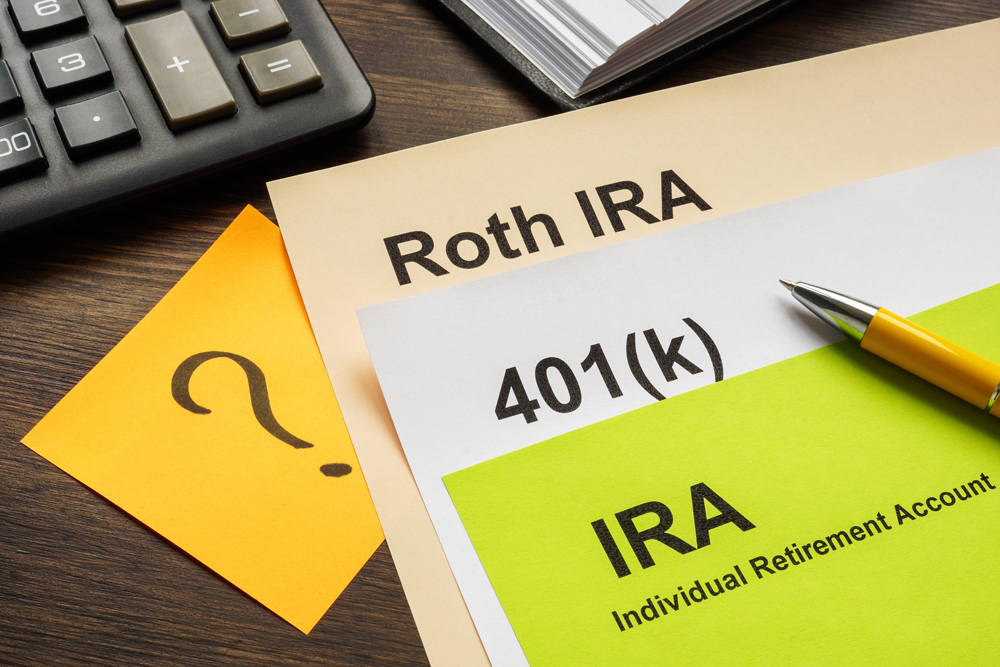
Retirement plans IRA, 401k and Roth IRA for choosing.

Traditional and Roth individual retirement accounts are both solid options for retirement savings. A Roth IRA offers tax advantages when you're ready to withdraw your funds, while contributions to a traditional IRA are tax-deferred until you take distributions. Comparing both IRA options can help you make an informed decision.


Roth Basics
Contributions to a Roth IRA are made with after-tax money. That means you won't get a tax deduction for your contributions. However, the money in your account grows tax free. Withdrawals are also tax free, providing you with a tax-free income stream in retirement. The maximum contribution to Roth and traditional IRAs in 2026 is $7,500, or $8,600 for people aged 50 or older.


No Required Distributions
Traditional IRAs require minimum distributions from your account after you reach age 73. In contrast, a Roth IRA has no minimum distribution requirement—ever. If you don't need the money in your account, you can leave it untouched to keep growing tax-free during your lifetime and then pass the Roth IRA tax-free to your heirs.


Income Limits
You cannot contribute to a Roth IRA if your modified adjusted gross income (MAGI) exceeds certain limits. In 2026, the income cap for single and head-of-household filers to contribute the maximum amount is $168,000. Married joint filers can contribute the full amount if their MAGI is $252,000 or less.


The Five-year Rule
Contributions to a Roth IRA can be withdrawn at any time, but earnings distributed before age 59-1/2 may be subject to a 10% penalty and income tax unless you meet an exception. After age 59-1/2, you can withdraw both contributions and earnings with no penalty once the account has been open for at least five tax years.


How to Decide
Consider a Roth IRA if you expect to be in a higher tax bracket in retirement. Since you'll pay taxes on the conversion, it's usually best to do so when your income dips. Your financial professional can help you make an informed decision.

1071878


SUBSCRIBE

Enter your Name and Email address to get
the newsletter delivered to your inbox.

Please include name of person that directed you to my online newsletter so I can thank them personally.


CONTACT US

Enter your Name, Email Address and a short message. We'll respond to you as soon as possible.

Christopher Hibbard is a financial advisor with, and securities and advisory services are offered through LPL Financial (LPL), a registered investment advisor and broker-dealer (member FINRA/SIPC). Insurance products are offered through LPL or its licensed affiliates. Teachers Federal Credit Union (TFCU) and Teachers Investment Services are not registered as a broker/dealer or investment advisor. Registered representatives of LPL offer products and services using Teachers Investment Services, and may also be employees of TFCU. These products and services are being offered through LPL or its affiliates, which are separate entities from and not affiliates of, TFCU or Teachers Investment Services. Securities and insurance offered through LPL or its affiliates are:

Disclosure
This publication is not intended as legal or tax advice. All individuals, including those involved in the estate planning process, are advised to meet with their tax and legal professionals. The individual sponsor of this newsletter will work with your tax and legal advisors to help select appropriate product solutions. We do not endorse or guarantee the content or services of any website mentioned in this newsletter. We encourage you to review the privacy policy of each website you visit. Limitations, restrictions and other rules and regulations apply to many of the financial and insurance products and concepts presented in this newsletter, and they may differ according to individual situations. The publisher and sponsor do not assume liability for financial decisions based on the newsletter’s contents.
The sender and LTM Marketing Specialists LLC are unrelated companies. This publication was prepared for the publication’s provider by LTM Client Marketing, an unrelated third party. Articles are not written or produced by the named representative.

The information and opinions contained in this web site are obtained from sources believed to be reliable, but their accuracy cannot be guaranteed. The publishers assume no responsibility for errors and omissions or for any damages resulting from the use of the published information. This web site is published with the understanding that it does not render legal, accounting, financial, or other professional advice. Whole or partial reproduction of this web site is forbidden without the written permission of the publisher.